

Beyond "What’s Wrong": The Evolution of Trauma-Informed Care (TIC) in Australia - How Australian mental health nurses are transforming recovery by recognising the deep roots of distress.
In the high-pressure environment of Australian acute mental health units, a fundamental paradigm shift is underway. For decades, the standard medical model prioritised symptom management and immediate risk mitigation. Today, however, we are witnessing a move toward Trauma-Informed Care (TIC)—a framework that acknowledges the pervasive nature of trauma and seeks to transform clinical interactions.
The Prevalence of the "Invisible Wound"
To understand why TIC is so vital, we must look at the data. In Australia, it is estimated that the vast majority of individuals accessing public mental health services have a history of significant trauma, often rooted in childhood. When a patient enters a ward, they aren't just bringing their current symptoms; they are bringing a lifetime of experiences that have shaped their nervous system.
In this context, traditional nursing interventions, if not carefully applied, can inadvertently mirror past traumas. Power imbalances, locked doors, and strict schedules can trigger "fight or flight" responses, leading to what clinicians call re-traumatisation.In Australia, trauma is not a niche concern; it is the statistical reality for the vast majority of people accessing public mental health services. When a patient enters a ward, they aren't just bringing a diagnosis; they are bringing a nervous system shaped by their history.
Trauma Prevalence in Clinical Settings
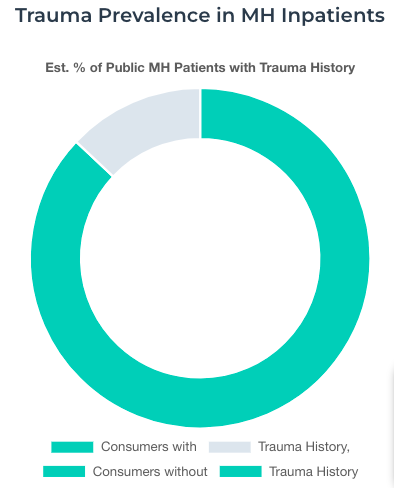
Source: Aggregated data from Blue Knot Foundation & Australian state health reports.
Failing to recognise this history leads to re-traumatisation. Common nursing practices—locked doors, strict schedules, and power imbalances—can trigger "fight or flight" responses in those with trauma histories, often escalating the very distress nurses are trying to alleviate.
The Six Pillars of the Australian Framework
The Australian healthcare system has embraced six core principles that guide nurses from "doing to" the patient to "doing with" them. These principles prioritise transparency, choice, and cultural safety, particularly for Aboriginal and Torres Strait Islander communities who carry unique intergenerational burdens.
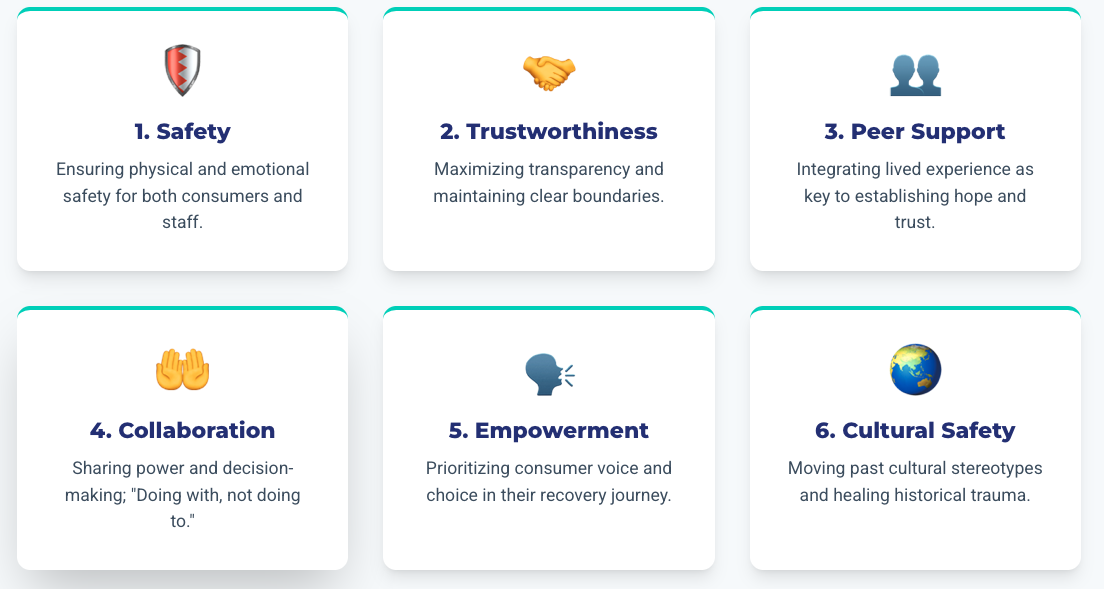
Safety: Both physical and emotional. Does the patient feel they are in a place where they won't be harmed?
Trustworthiness: Transparency is key. Nurses must be clear about what is happening and why.
Peer Support: Integrating lived experience into the care team provides a bridge of hope that clinical staff alone sometimes cannot provide.
Collaboration: Moving from "doing to" the patient to "doing with" them.
Empowerment: Validating the patient’s voice and giving them choices in their recovery.
Cultural Safety: Acknowledging the specific historical and intergenerational traumas faced by Aboriginal and Torres Strait Islander peoples.
Measuring the Impact: Reducing Restraint and Seclusion
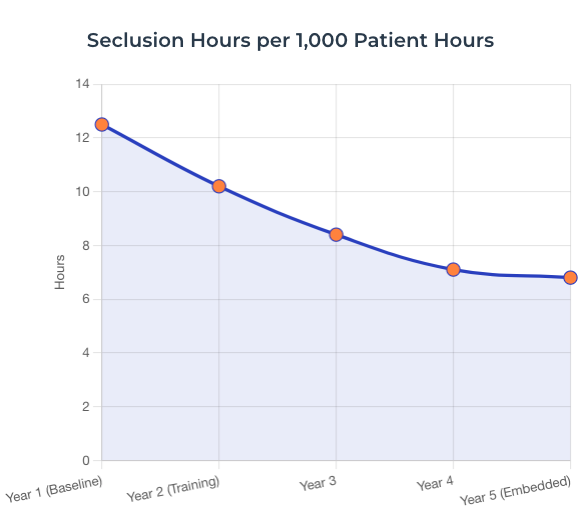
The most tangible evidence for TIC is the reduction in restrictive practices. Programs like Safewards have demonstrated that when staff focus on de-escalation rather than coercion, wards become safer for everyone.
One of the primary goals of Trauma-Informed Care in Australia is to eliminate seclusion and restraint. These practices are known to re-traumatise patients.
The chart demonstrates the efficacy of TIC implementation programs (like 'Safewards') in reducing seclusion hours over a 5-year period in a representative Australian health district.

Caring for the Carer: The Workforce Challenge
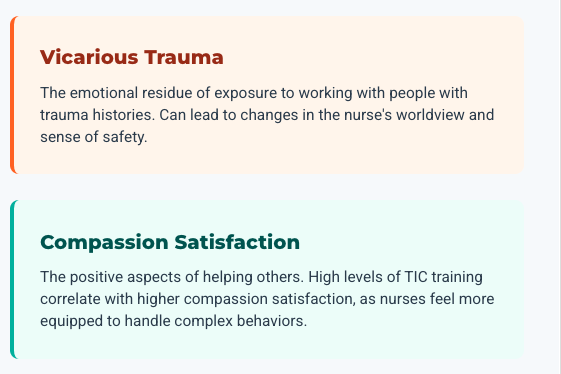
We cannot talk about trauma-informed care without talking about the nursing workforce. Mental health nursing is emotionally demanding. When nurses are exposed to the traumatic stories of their patients daily, they risk Vicarious Trauma.
Interestingly, research suggests that nurses who are well-trained in TIC and feel supported by their organisations report higher levels of Compassion Satisfaction. Interestingly, the data suggest that nurses who feel equipped with trauma-informed skills are less likely to experience burnout. By understanding the "why" behind challenging behaviour, nurses maintain their empathy even in high-stress situations. When a nurse feels they have the tools to help a patient heal, rather than just "managing" them, their professional fulfilment increases.
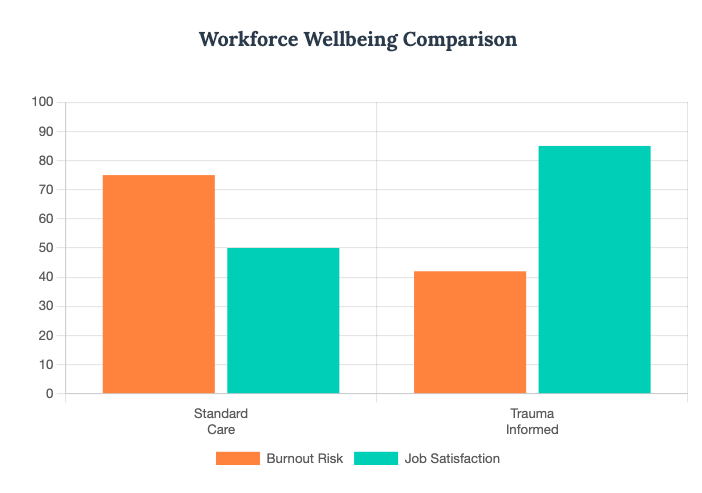
Caring for traumatised individuals impacts the carer. Understanding the balance between Vicarious Trauma (burnout) and Compassion Satisfaction is critical for workforce sustainability.
The Road Ahead
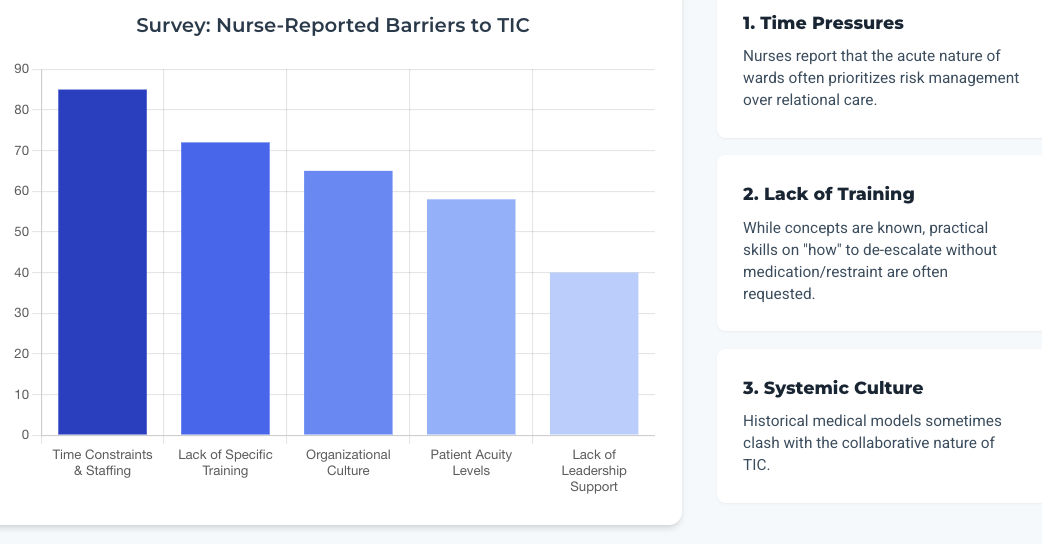
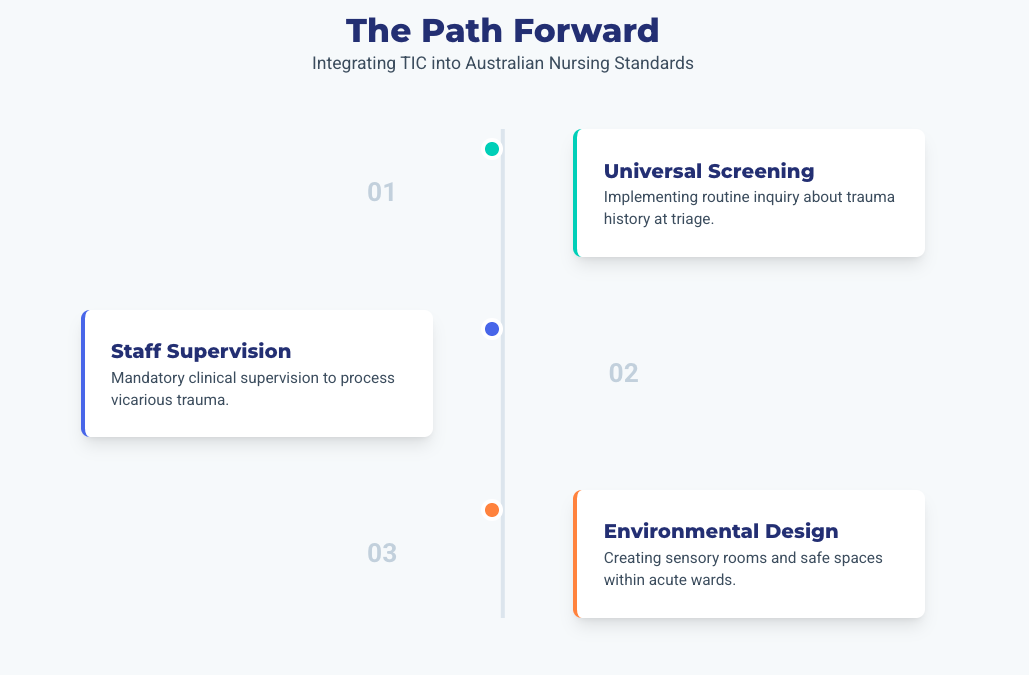
While the benefits are clear, systemic barriers remain. Time pressures and staffing shortages often push teams back into traditional "command and control" styles of nursing. Overcoming these requires a commitment to universal screening, sensory ward designs, and ongoing clinical supervision.
The path forward requires more than just a policy change; it requires a cultural one. By prioritising universal trauma screening, providing robust clinical supervision for staff, and designing sensory-friendly ward environments, Australia can lead the way in creating a mental health system that truly heals.
The question is no longer "What is wrong with you?" but "What happened to you, and how can we help you move forward?"
As Australia continues to refine its National Safety and Quality Health Service (NSQHS) Standards, trauma-informed care is no longer an optional "extra"—it is becoming the gold standard for therapeutic excellence in mental health nursing.
KEY TAKEAWAYS
Trauma-Informed Care (TIC) is a clinical framework used in Australia to recognise patient trauma.
Key principles include Safety, Trust, Peer Support, Collaboration, Empowerment, and Cultural Safety.
TIC implementation has led to a 45% reduction in seclusion and restraint in Australian wards.
The framework aligns with National Safety and Quality Health Service (NSQHS) Standards.